
QLab expands quantum computing access to IBM platform
(Image credit: Ryan Lavine for IBM)
The National Quantum Laboratory (QLab) at the University of Maryland (UMD) has announced a new agreement granting university members and QLab users remote access to IBM quantum computers.
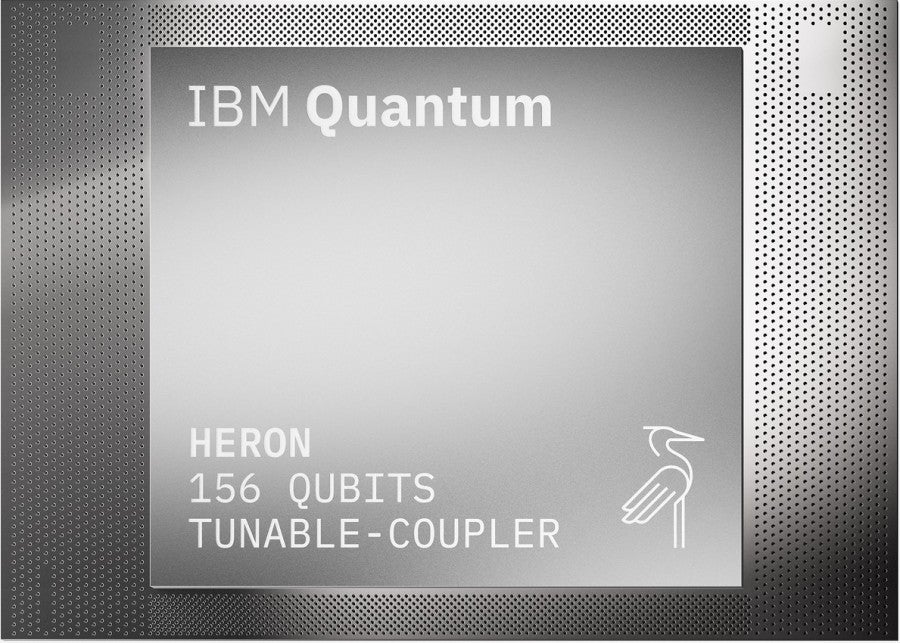
As a quantum user facility, QLab provides access to quantum computing capabilities for researchers, educators, and entrepreneurs. This new access agreement significantly expands the types of quantum technology available to the UMD community as IBM offers state-of-the-art superconducting quantum processor units (QPUs). Users will gain access to cutting-edge IBM Quantum Heron (156 qubits) and IBM Quantum Nighthawk (120 qubits) QPUs, which are cloud-accessible via the IBM Quantum Platform.
QLab will streamline adoption by allowing any UMD department or unit to access these devices. License administration will be managed by QLab through the Division of Information Technology (DIT), mirroring the process currently used for software licenses and high-performance computing resources.
"We are excited to expand QLab's offering to the university and wider research community from trapped ion systems to other qubit modalities," said Norbert Linke, Director of QLab. "IBM's processors permit our users access to state-of-the-art superconducting circuit devices for the first time." The collaboration is already driving immediate academic and research applications, including:
In the Classroom: A specialized quantum computing course taught by Prof. Xiaodi Wu in the Department of Computer Science, where students will test their code on live, real-world quantum hardware.
In the Lab: A cutting-edge research project exploring phase transitions in quantum systems that are mixed, which means only partial knowledge about the quantum state is available, led by graduate students and postdocs in Prof. Alexey Gorshkov's group at the Joint Quantum Institute (JQI).
“Access to the IBM devices will be crucial for our project exploring novel many-body mixed-state phases and their transitions.” says Yuxin Wang, Hartree Postdoctoral Fellow at the Joint Center for Quantum Information and Computer Science (QuICS).
UMD remains a primary driver of the rapidly advancing field of quantum technology and sits at the center of Gov. Wes Moore’s Capital of Quantum initiative. The university boasts a robust quantum ecosystem that includes multiple research centers and more than 200 quantum scientists – one of the largest concentrations in the world.
About QLab
The National Quantum Laboratory (QLab) at the University of Maryland is a pioneering user facility dedicated to accelerating quantum computing research, education, and entrepreneurship by providing multidisciplinary users with access to world-class quantum hardware and resources.