
QLab partners with QuEra Computing to provide access to neutral-atom quantum systems
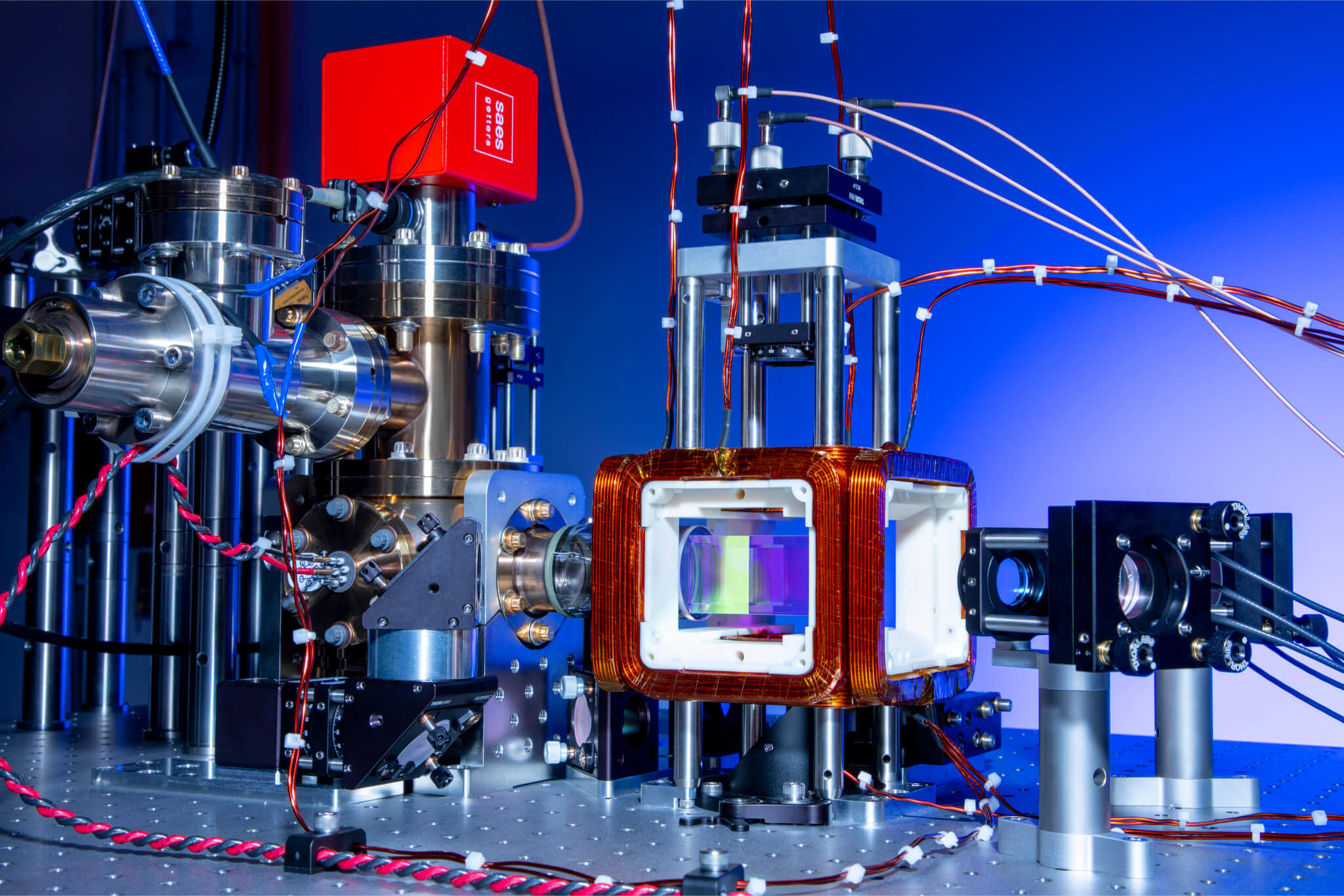
QuEra Computing, the Boston-based developer of neutral-atom quantum computers and simulators, has entered into an agreement with QLab to provide researchers and educators with premium cloud access to its 256-qubit Aquila analog quantum computer, with access to its 260-qubit Gemini gate-model system expected to follow soon.
“We are excited to offer our user community access to QuEra’s neutral atom-based systems,” said Norbert Linke, Director of QLab. “This allows scientists, educators, and entrepreneurs to develop and test hands-on quantum applications with up to 256 qubits offered by this quickly developing hardware platform.”
Concurrently, QuEra and the Capital of Quantum announced that QuEra will establish a physical presence in Discovery District Maryland, joining a growing cluster of quantum hardware companies. “We are excited to have QuEra set up an office in Discovery District Maryland,” said Dr. Corey Stambaugh, Director of the Capital of Quantum. “These developments reflect the kind of collaboration between industry and the University of Maryland that's driving Maryland's quantum ecosystem forward.”
How QuEra's neutral-atom architecture works
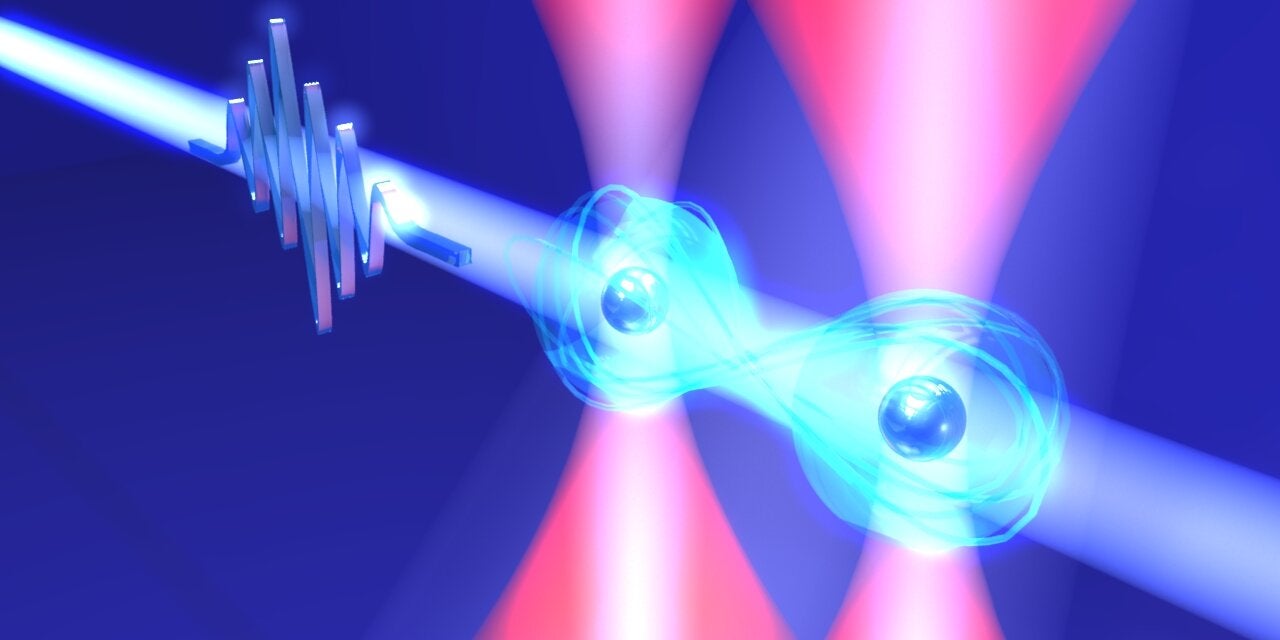
QuEra’s technology leverages a scalable approach to quantum computation and simulation based on neutral atoms. Optical tweezers - highly focused, microscopic laser beams - are used to hold and move individual laser-cooled rubidium-87 atoms in a vacuum chamber and to control their electronic state.
Because these atoms are electrically neutral, in low-energy electronic states, they only interact via negligibly weak van der Waals interactions. To create interactions and perform quantum operations, precisely timed laser pulses are used to excite specific atoms into high-energy "Rydberg states." When in a Rydberg state, the atom's electron shell swells, producing strong, controllable interactions with nearby atoms. The resulting Rydberg blockade governs the dynamics in analog quantum simulations and is used to realize the conditional logic gates required for quantum computation.
The advantages of neutral atoms
QuEra’s neutral-atom architecture introduces a new platform for quantum computation and simulation, complementing the portfolio of trapped-ion and superconducting systems offered through QLab’s partners IonQ and IBM Quantum. Specific strengths of the neutral-atom approach are:
- Dynamic Reconfigurability: Because the atoms are held and controlled entirely by optical tweezers, researchers are not restricted to a fixed, hardwired grid. The atoms can be dynamically rearranged on the fly into almost arbitrary geometries - such as dense clusters or customized lattices - tailored to the specific needs of the algorithm or simulation being executed.
- Dense 2D Scalability: Neutral atoms do not electrically repel each other, allowing them to be densely packed into large, two-dimensional arrays with relative ease. This enables large physical-qubit arrays in a highly compact footprint.
- Identical Qubits: The qubits are provided by nature; every single rubidium atom is fundamentally identical. This avoids the device-to-device variation associated with fabricated qubits.
Current capabilities and the roadmap ahead
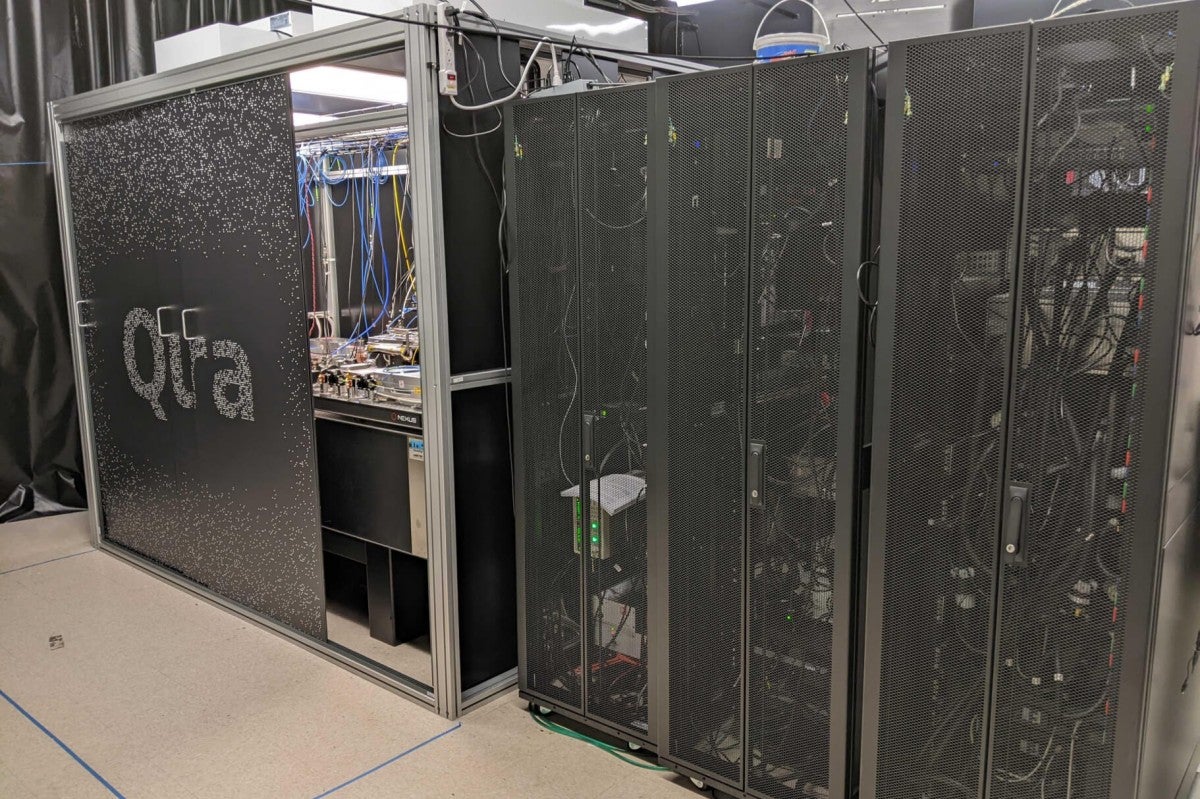
Through this agreement, QLab researchers currently have access to Aquila, QuEra’s 256-qubit analog quantum simulator. Instead of expressing a computation as a sequence of logical gates, researchers program Aquila by choosing the initial geometry of the atom array and specifying how laser parameters change over time. This allows them to explore optimization problems and simulate models relevant to materials research by leveraging the natural evolution of the atomic states. QLab researchers have already begun experiments on many-body quantum scar dynamics.
QuEra is also developing gate-model and fault-tolerant systems that use “atom shuttling” - the physical movement of entangled atoms between processing zones during computation - to provide flexible connectivity and support quantum error correction.
- Gemini (cloud access coming soon): Building on the foundation of Aquila, the Gemini series introduces highly coherent digital gate operations alongside dynamic optical tweezers, allowing atoms to be shuffled in real time during a circuit. Gemini aims to push the boundaries of logical qubit creation and early error correction.
- Libra (the fault-tolerant future): QuEra’s roadmap plans to release Libra in 2028, a system explicitly designed for large-scale, fault-tolerant quantum computing. Libra is projected to support hundreds of error-corrected logical qubits, which are encoded using large arrays of thousands of physical atoms, aiming for practical quantum advantage.
About QuEra Computing
QuEra Computing is a Boston-based quantum computing company developing scalable systems based on neutral-atom arrays. Its platforms include Aquila, a 256-qubit analog quantum simulator, and Gemini, a 260-qubit gate-model system supporting logical-qubit and quantum-error-correction research. Building on research originating at Harvard University and MIT, QuEra is working toward large-scale, fault-tolerant quantum computers for scientific and commercial applications.
About QLab
The National Quantum Laboratory (QLab) at the University of Maryland is a pioneering user facility dedicated to accelerating quantum computing research, education, and entrepreneurship by providing multidisciplinary users with access to world-class quantum hardware and resources.
About the Capital of Quantum
The Capital of Quantum (COQ) is Maryland’s statewide initiative that coordinates, promotes, connects, and invests in the region’s quantum ecosystem - bringing together industry, research institutions, federal agencies, and investors to make Maryland and the national capital region the premier destination for quantum innovation, talent, and commercialization.